


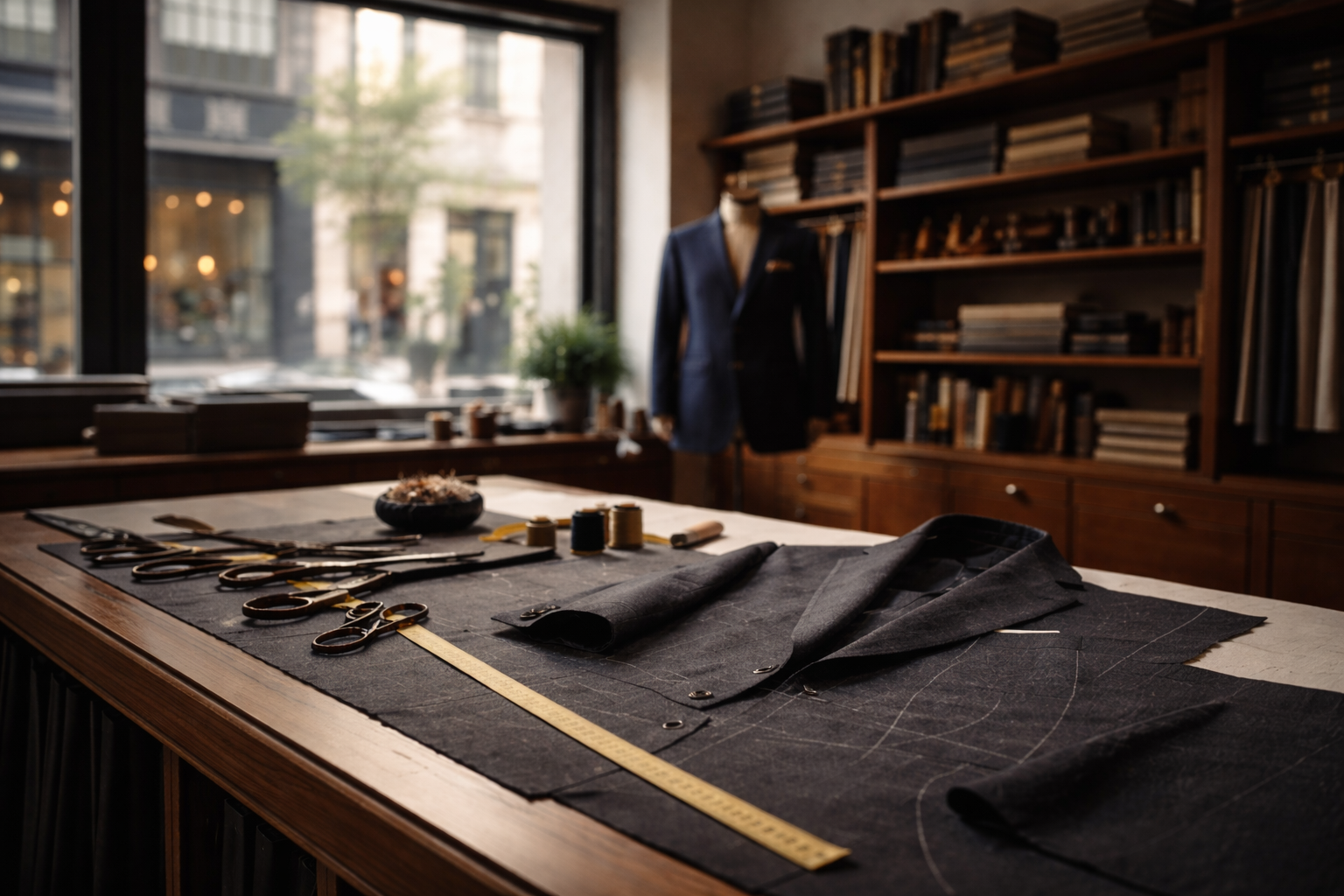
New York City's relationship with bespoke tailoring runs deeper than most realize. While London's Savile Row commands historical prestige, Manhattan has cultivated its own vibrant tailoring tradition shaped by European-trained craftsmen, American innovation, and the city's unique professional demands. At Klein Epstein Parker, we honor this heritage while advancing the art for modern professionals.
Key Takeaways
-
Manhattan hosted European-trained master tailors creating a distinct New York style
-
Brooks Brothers and Paul Stuart provided the foundation for American tailoring education
-
Italian and British influences merged to create unique NYC bespoke aesthetic
-
Contemporary New York tailoring balances Old World technique with modern innovation
-
The city's diverse professional landscape demands versatile, exceptional craftsmanship
Table of Contents
-
The European Foundations of NYC Tailoring
-
American Retail Icons and Sartorial Education
-
The Golden Age of Manhattan Bespoke
-
Contemporary Masters Carrying the Tradition
-
Klein Epstein Parker's Place in NYC Heritage
The European Foundations of NYC Tailoring
According to Permanent Style, Manhattan's tailoring scene flourished with European-trained bench tailors alongside those bred on the East Coast carriage trade. The majority were Italian craftsmen, with notable British representatives bringing Savile Row techniques to the New World.
This European foundation created interesting stylistic tensions. British tailors emphasized structured shoulders and precise military-inspired silhouettes. Italian craftsmen favored softer construction, emphasizing drape and comfort. The synthesis of these approaches in New York's melting pot produced something distinctly American yet informed by Old World excellence.
The city attracted master tailors seeking opportunity in America's growing financial capital. These craftsmen brought generational knowledge, traditional hand-finishing techniques, and understanding that proper suiting required time and meticulous attention. Their workshops, often tucked into Manhattan's side streets, became destinations for discerning gentlemen who valued fit and quality above convenience.
What set New York apart was pragmatic innovation. European tailors maintained their construction standards while adapting to the American business culture's faster pace and different aesthetic preferences. The result was tailoring that honored tradition while embracing the forward-looking energy that defines New York itself.
American Retail Icons and Sartorial Education
Brooks Brothers and Paul Stuart played crucial roles in educating American professionals about proper fit and quality construction. As Bruce Boyer noted, the typical sartorially capable male would start at Brooks Brothers, receiving special grounding in taste and attitude about how clothes should look and feel.
|
Retailer |
Contribution to NYC Tailoring |
Signature Style |
|
Brooks Brothers |
Foundation in classic American taste |
Natural shoulder, sack suit |
|
Paul Stuart |
Introduction to shaped, European-influenced cuts |
Modern slim silhouettes |
|
Barneys New York |
High-fashion tailoring accessibility |
Continental styling |
|
Bergdorf Goodman |
Luxury bespoke services |
Traditional with fashion elements |
Paul Stuart represented the next step, offering shaped clothes in the 1960s and 1970s that made men look, as Alan Flusser observed, sexier and thinner and younger. This progression from Brooks Brothers' conservative foundation to Paul Stuart's more adventurous styling educated generations about fit possibilities and construction quality.
These retailers didn't just sell suits. They provided sartorial education through knowledgeable staff who understood construction, advised on appropriate styling for different contexts, and connected customers with skilled tailors for alterations that perfected fit. This ecosystem supported both ready-to-wear and bespoke sectors, creating a sophisticated clientele who appreciated quality craftsmanship.
The influence extends to present day. Klein Epstein Parker's approach reflects this educational tradition, guiding clients through fabric selection, styling decisions, and fit nuances that transform good suits into exceptional ones.
Discover Klein Epstein Parker's approach to modern bespoke tailoring that honors New York's rich heritage.
The Golden Age of Manhattan Bespoke
The mid-20th century represented Manhattan's bespoke tailoring's golden age. Master craftsmen like Leonard Logsdail, a London-trained tailor who established himself as arguably the most prestigious bespoke maker in the city, created suits for New York's elite that rivaled anything produced on Savile Row.
Piero Dimitri exemplified the Italian influence, catering to high-end celebrities and clients who weren't afraid to order a dozen jackets or suits at once. His house style featured narrow and lean construction with small, soft shoulders and close-fitting bodies. The minimalist aesthetic, styled closer to Neapolitan tailoring, offered elegant and youthful alternatives to British structured formality.
These master tailors created more than clothing. They established relationships spanning decades, understanding not just their clients' measurements but their lifestyles, professional demands, and personal style evolution. Suits were created through multiple fittings, ensuring absolute precision that justified significant investment.
The era also saw American tailors developing distinct voices. Some blended European training with American practicality, others created entirely new approaches suited to New York's unique blend of formality and dynamism. This diversity meant professionals could find tailors whose aesthetic aligned perfectly with their personal style and professional context.
Contemporary Masters Carrying the Tradition
Today's New York tailoring scene thrives with both established houses and innovative newcomers. According to Robb Report, the city features local and international artisans, heritage makers working at the top of their craft, and young designers putting their stamp on centuries-old art.
Martin Greenfield Clothiers carries a unique heritage. Founder Martin Greenfield was orphaned in the Holocaust before emigrating to America and finding work as a floor boy at the factory he eventually purchased. As a master tailor, Greenfield made suits for U.S. presidents and created a Brooklyn institution honoring both his survival story and dedication to craft excellence.
Manolo Costa's Upper East Side atelier reflects old-world glamour. Before establishing his own practice, Costa helped launch Paul Stuart's Phineas Cole line and managed the Purple Label department at the Polo mansion. His bespoke garments echo American tailoring from the 1920s and 1930s, featuring soft natural shoulders and structured bodies that balance comfort with presence.
Contemporary tailors like those at The Tailory New York bring fresh perspectives. This women-owned, appointment-only operation combines modern fashion design with heritage custom tailoring art, serving a diverse clientele across gender identities and style preferences. This evolution demonstrates how New York tailoring adapts while maintaining construction quality and fit precision that define the craft.
Klein Epstein Parker's Place in NYC Heritage
Klein Epstein Parker occupies a unique position within New York's tailoring continuum. We bridge traditional European craftsmanship and contemporary American innovation, creating garments that honor heritage while serving modern professional demands.
Our master tailors bring generational expertise informed by both Old World training and a deep understanding of how New Yorkers actually work, move, and present themselves professionally. This dual perspective allows us to create suits that feel rooted in tradition yet perfectly suited to contemporary life.
The Klein Epstein Parker approach emphasizes personal relationships similar to tailoring's golden age. We invest time understanding your professional context, style preferences, and how your suit needs to perform across different situations. This information guides every decision from fabric selection to styling details, creating garments that feel distinctly yours.
We source fabrics from the same prestigious European mills that supplied New York's legendary tailors while offering contemporary options that meet modern performance and sustainability expectations. Our construction methods honor time-tested techniques like full-canvas interiors and extensive hand-finishing while incorporating innovations that enhance comfort and durability.
What distinguishes Klein Epstein Parker is its commitment to the complete experience. Bespoke tailoring isn't merely about measurements and stitching. It's collaborative process, education in quality and fit, and relationship that serves you throughout your professional life. We maintain detailed records of your patterns, preferences, and past orders, ensuring consistency across garments and easy updates as your needs evolve.
Frequently Asked Questions
How does New York tailoring differ from Savile Row style?
New York tailoring typically features softer shoulders, more relaxed construction, and greater emphasis on comfort compared to Savile Row's structured military-inspired aesthetic. NYC bespoke also tends toward more contemporary styling while maintaining traditional construction quality.
What makes a tailor truly "bespoke" versus made-to-measure?
True bespoke creates unique patterns from scratch for each client, involves extensive hand-finishing, requires multiple fittings with a basted garment, and is crafted by a single tailor or a small team. Made-to-measure adjusts existing patterns but lacks this level of customization and craftsmanship.
How long has Klein Epstein Parker been serving New York?
Klein Epstein Parker has deep roots in New York's tailoring community, combining traditional European training with generations of experience serving the city's discerning professionals across all industries.
Can I see examples of different New York tailoring styles?
Absolutely. During your consultation at Klein Epstein Parker, we'll show you various styling approaches from classic Wall Street minimalism to creative SoHo aesthetics, helping you identify which direction best serves your professional needs and personal preferences.
What should I look for in a New York bespoke tailor?
Seek tailors with demonstrable expertise in pattern-making and fitting, transparent construction methods emphasizing handwork, understanding of your professional context, and ability to articulate their house style while accommodating your preferences.
Experience New York's Tailoring Excellence
New York's bespoke tailoring heritage represents more than historical interest. It's a living tradition that continues evolving through houses like Klein Epstein Parker that honor craftsmanship while embracing innovation. Our approach connects you to this rich lineage while creating garments perfectly suited to contemporary professional life.
Whether you're establishing your professional wardrobe or refining an existing collection, Klein Epstein Parker provides expertise and craftsmanship that justify the bespoke investment. We understand that in New York's competitive landscape, how you present yourself directly impacts opportunity.
Visit our showroom and experience the difference that generations of tailoring expertise make. Schedule your consultation with Klein Epstein Parker today and discover why New York's most discerning professionals trust us to create suits that define their professional presence.
References:
Permanent Style. (2023). "The History of New York Bespoke Tailoring: An Introduction with Bruce and Alan." Retrieved from https://www.permanentstyle.com/2023/04/the-history-of-new-york-bespoke-tailoring-an-introduction-with-bruce-and-alan.html
Robb Report. (2024). "The Best Bespoke, Custom and Made-to-Measure Suits in NYC of 2024." Retrieved from https://robbreport.com/style/menswear/best-bespoke-custom-menswear-nyc-1234682489/